
A full programme of talks is currently being arranged. The draft programme is shown below:
| Time | Speakers | Working Titles of Talks |
|---|---|---|
| 10:00am | Terry Ransome/Ray Cotton | Exploring the Earth’s Magnetic Shield |
| 10:45am | Dr Kim Lake Director of UK Operations, OHB Space UK | About OHB and the Venus probe that is being built |
| 11:30am | Dr Meganne Christian ESA Reserve Astronaut | From Antarctica to Space |
| 12:15pm | Dr David Parker Professor of Space Systems and Policy at the University of Southampton | ‘Europe goes to the Moon – Artemis and beyond |
| 1:00pm | Dr Alison Camacho Bristol Astronomical Society | Introduction to Space |
| 1:45pm | Dr Jenifer Millard Managing Editor Fifth Star Labs | Life in the Cosmos |
| 2:45pm | Dr Rachael Hamp Open University | Hidden Oceans, Ice Volcanoes and the Search for Life |
| 3:45pm | Dr Leigh Fletcher Professor of Planetary Science at University of Leicester | JUICE: ESA’s Mission to Explore the Icy Worlds of Jupiter |
In the morning, the talks will all be around exploration of the Solar System.
In the afternoon, the talks will be about astrobiology and whether we are alone.
The talks will be part of a wider range of activities for everyone to enjoy.
Our speakers
Dr Alison Camacho
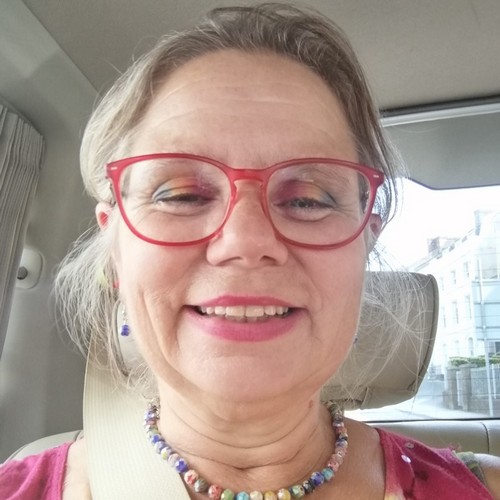
After getting her first degree in Physics from the University of Bristol, Alison spent 10 years working in the semiconductor industry. During that time she researched part time (at the University of Wales, Cardiff) and successfully defended her PhD (Dry Etching of Semiconductors) in 1994. She moved into teaching after obtaining her PGCE and has spent over 20 years in the senior school classroom teaching 11 to 18 year olds science and particularly Physics at A level. She was Head of Physics at Clifton High School for a decade. She left to become a freelance tutor and to develop her art. She now owns and runs 42tutoring which specialises in helping A level Physics students raise their grade through online classes.
Although her focus is tutoring, she is also a resin artist. Her work is often astronomy and geode/geology based. She has also created some online art courses – continuing as an educator that way too. Her art website is fuzzycomma.com if you would like to see her recent art work.
Alison has a long-time interest in astronomy and has been a member of the Bristol Astronomical Society for many years, including committee positions, most recently as BAS secretary. She periodically teaches astronomy as part of the BAS outreach.
Dr Meganne Christian
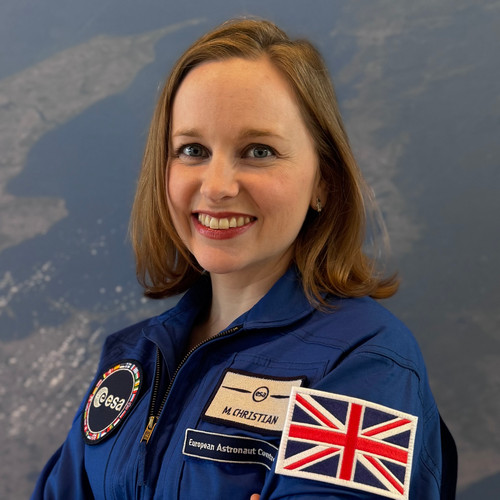
Meganne Christian was born 1987. In addition to British and Italian citizenship, she also holds Australian and New Zealand citizenship.
Meganne studied at the University of New South Wales in Sydney, Australia, and graduated in 2009 with a Bachelor of Engineering in industrial chemistry receiving a final grade of Honours Class 1. During her studies she undertook several internships at chemical industries where she worked on optimising and troubleshooting water treatment processes.
From 2010 to 2014 she completed her Doctorate at the University of New South Wales and received her PhD in industrial chemistry with several scholarships such as the University of New South Wales Research Excellence Award. The topic of her thesis was “Core-shell borohydrides for reversible hydrogen storage” where she investigated the design, synthesis and advanced characterisation of nanomaterials for hydrogen storage applications.
From 2018 to 2019, Meganne served as a winter-over scientist at the Concordia station in Antarctica for the national research council of Italy, and the Italian National Antarctic Research Programme. As scientist in charge of atmospheric physics and meteorology at the French-Italian research base, she was responsible for various observatories, including radiation, meteorology, stratospheric lidars, chemical and physical atmospheric aerosols and infrared radiation for Antarctic clouds.
She returned to the Concordia Station for a temporary assignment as scientist in charge of the atmospheric physics and meteorology observatories from October 2020 to January 2021.
For these expeditions Meganne was also trained in firefighting, medical aid, rescue, and survival in extreme conditions. She participated in biomedical research run by ESA and various public activities to report about her experiences and activities during the winter-over.
Between 2014 and 2022, Meganne worked as a research fellow and subsequently staff researcher at the Institute of Organic Synthesis and Photoreactivity and the Institute for Microelectronics and Microsystems in Bologna, Italy, as part of the EU scientific research initiative Graphene Flagship. During this time, she took part in two parabolic flight campaigns in 2017 and 2021 to test graphene coatings for thermal management in satellites. She successfully issued further articles and award-winning publications and served as ambassador for Graphene Flagship initiatives.
From 2021, Meganne was a lecturer on Problem Solving and Decision Making for businesses, as well as a researcher for the National Research Council of Italy in Bologna, Italy. She is also a start-up founder and CEO of a UK company cultivating technologies for the benefit of humankind.
Meganne’s favourite sports include climbing, white-water rafting, and scuba diving. She holds a black belt in Hapkido and enjoys crafts such as sewing, knitting and crochet. Furthermore, Meganne is an avid singer and active in multiple choirs, where she has also acted as board member and assistant choreographer.
Ray Cotton
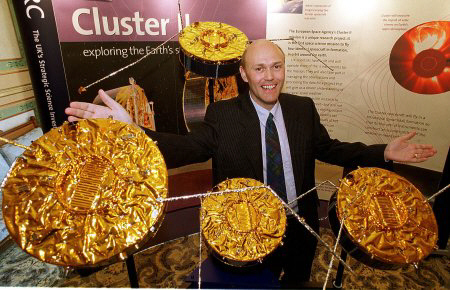
Ray Cotton, a Bristol resident, won the competition conducted by the European Space Agency to name the Cluster spacecraft.
Dr Leigh Fletcher
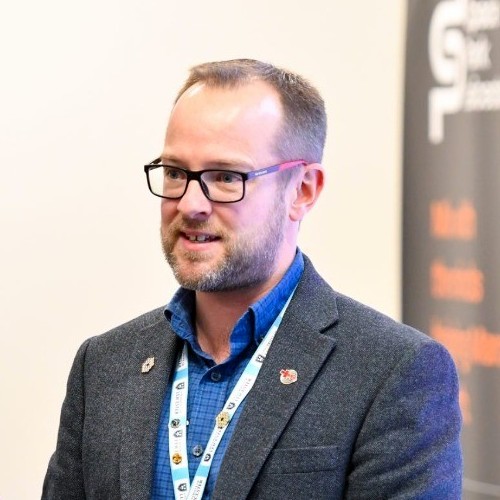
Dr. Leigh Fletcher is a Professor of Planetary Science at the University of Leicester, specialising in the exploration of our Solar System’s giant planets via robotic spacecraft missions, ground-based astronomical facilities, and space telescopes.
He earned a Natural Science degree from Cambridge, a PhD in Planetary Physics from Oxford, and has since worked as a NASA fellow at the Jet Propulsion Laboratory and as a Research Fellow at Oxford. He held a Royal Society University Research Fellowship (URF) between 2013 and 2020. He was the recipient of the 2016 Harold C. Urey prize for outstanding achievements in planetary science by an early-career scientist, awarded by the Division for Planetary Sciences (DPS) of the American Astronomical Society. He is a team member for the Cassini mission to Saturn, the Juno and JUICE missions to Jupiter, and is a passionate advocate for future exploration of the distant Ice Giants. He currently leads a planetary atmospheres team at the University of Leicester, previously funded by the Royal Society, STFC, and the European Research Council.
Dr Rachael Hamp
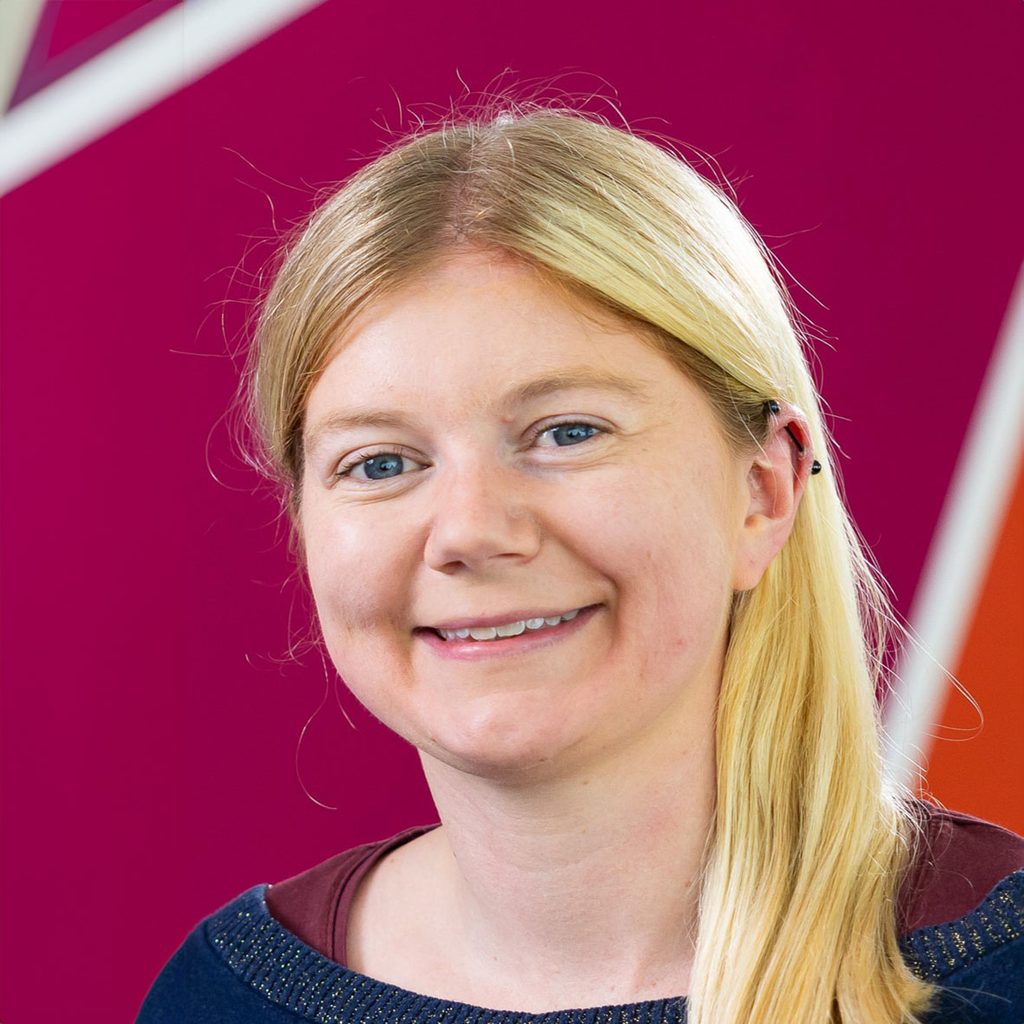
Dr Rachael Hamp is a Research Fellow with AstrobiologyOU at The Open University, where she investigates some of the most intriguing places in our Solar System: icy moons such as Enceladus and Europa.
With a background in chemistry and a PhD in planetary science from The Open University, Rachael studies the geochemical processes taking place on icy worlds and what their chemistry can tell us about the environments hidden beneath their frozen surfaces. Her research is helping us understand whether these distant worlds could have the right conditions to support life. Rachael is also a member of a European Space Agency expert committee contributing to the development of ESA’s next Large-class mission to an icy moon in the outer Solar System
Dr Kim Lake
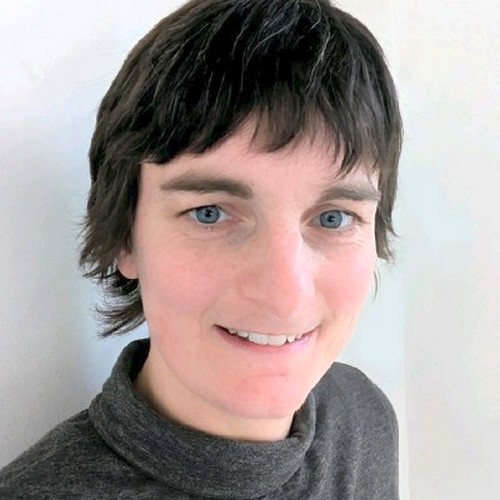
Kim Lake, Director of Operations at OHB Space UK. OHB Space UK is the new UK subsidiary of OHB SE, a leading European large scale integrator specialising in the development, implementation and operation of complete space systems. Kim has a PhD in Quantum Technology and has over 10 years experience in the Science, Technology and Space industry including involvement at component, Payload and Satellite system level through projects such as PACE, TRUTHS and IASI-NG.
Dr Jenifer Millard
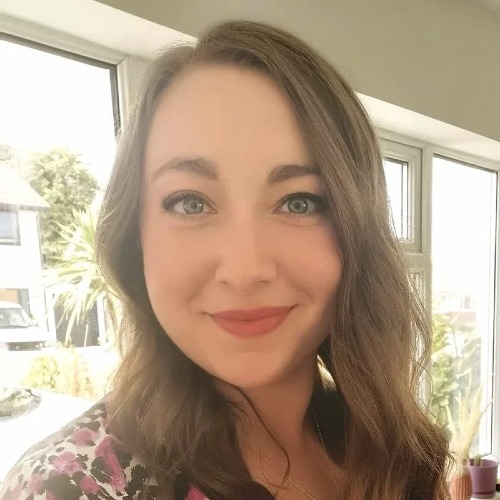
Dr. Jenifer Millard, known as Dr. Jen, developed a fascination with the night sky at a young age. While most children played with toy cars, she saw them as objects to tinker with. As a child, she looked at the Moon through an old telescope and fell in love with the mysteries of the universe. This curiosity led her to pursue a Ph.D. in Astrophysics at Cardiff University, where she studied “The Stuff Between the Stars.”.
During her doctoral studies, Dr. Jen realised that her true passion lay in sharing her love of space with others. She now holds various roles that allow her to engage with the public and educate them about astronomy. As the Managing Editor of the “Sky Guide” App at Fifth Star Labs, she helps people explore the wonders of the night sky. She is also the writer and host of the popular “Awesome Astronomy” podcast, a science presenter for BBC1 Wales’ “Weatherman Walking” series, and frequently appears on TV and radio, explaining the latest advances in astronomy and space exploration, as featured on BBC’s AI Decoded. Her TEDxCardiff talk, “A Waste of Space,” is available on YouTube. Dr. Jen lectures at Cardiff University, co-organising the “Astronomy in Action” adults learning module.
In addition to her media work, Dr. Jen actively participates in practical astronomy. She co-organises Astrocamp, a bi-annual star party where amateur astronomers gather to observe the cosmos and participate in various activities. She is the Honorary President of the Barry Astronomical Society and has been recognised as one of Cardiff University’s 30ish Award Winners for 2022, acknowledging her contributions to the alumni community.
When she’s not immersed in the world of space, Dr. Jen enjoys relaxing with movies, building lego, and being bossed around by her cat!
Dr David Parker
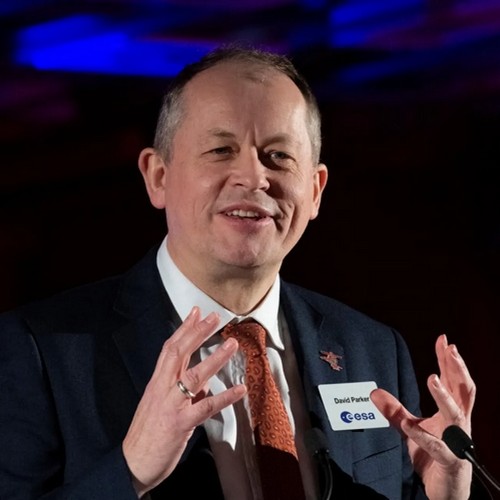
Over a thirty-five year career in industry, the public sector and international space management, David Parker has become one of the UK’s leading space programme and policy experts.
Initially working in engineering roles in British Aerospace Space Systems on the Cluster and Envisat missions and studying new astrophysics and planetary missions such as XMM, Herschel and Rosetta, he later moved into line management as the Head of GNC at MMS-UK in Bristol, UK. Following a two year secondment to the British National Space Centre (1997-99) as the Assistant Director of Industrial Sponsorship, he returned to industry at Astrium, Stevenage responsible for institutional business development in space science across the company’s three countries. He led the successful bid teams for projects such as Aeolus, LISA Pathfinder and the ExoMars rover and helped establish the space science group known as SPAN.
Having joined the research councils in 2004 to lead their European Space Agency science and exploration programmes, he subsequently helped create the UK Space Agency in 2010, becoming Director of Technology, Science and Exploraton before being appointed its Chief Executive in 2013. He negotiated the establishment of the first ESA centre in the UK, which became ECSAT at Harwell; established a national cubesat programme (UKube-1); the National Space Technology Programme; and the education programme supporting Tim Peake’s Principia mission to the International Space Station in 2015-16.
As Director of Human and Robotic Exploration at the European Space Agency (2016-23), he created Europe’s multi-billion space exploration programme, E3P- Terrae Novae, and managed contributions to the ISS, lunar exploration (including ESA’s role in Artemis) and Mars exploration. He helped select the latest set of European astronauts including the first astronaut candidate with a physical disability, John McFall.
He holds a BSc in Aeronautics and Astronautics from the University of Southampton and a PhD in aeronautical testing technologies sponsored by NASA’s Langley Research Center. He was the 2019 recipient of the Royal Aeronautical Society’s Geoffrey Pardoe Award for long and valued service to the space sector and was the 2024 UK Space and Satellite Personality of the Year.
Terry Ransome
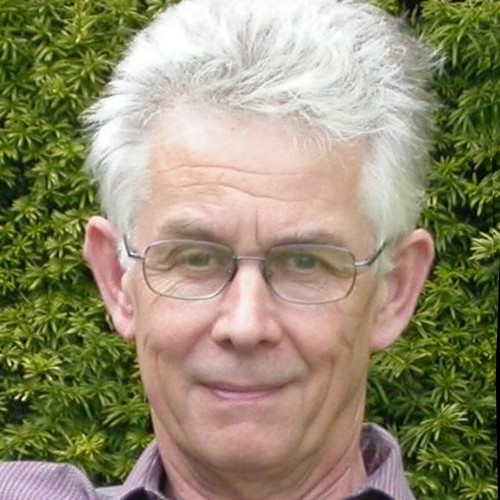
Terry graduated from a student apprenticeship with the Marconi Company and Loughborough University in 1969, at the same time as Apollo 11 landed on the Moon. And, like many others, he wanted to work ‘in space’.
After a year at Leicester under Professor Ken Pounds and armed with an MSc in Experimental Space Physics he started work in Spacecraft Assembly and Test with British Aircraft Corporation at Filton, Bristol in 1971. He was soon asked if he would like to ‘go to Australia and launch a rocket’! He said ‘yes’. That was Skylark SL812 which was followed by GEOS 1 and 2 launched from Cape Canaveral, and development testing work on the Photon Detector Assembly for the Hubble Telescope. Five years in the NASA Michoud facility in final acceptance testing of Space Shuttle External Tanks was followed by a return to Filton in 1986 and ‘office work’ on feasibility studies for Polar Platform, XMM Newton, Planck, and many others – not all of which made the selection for development. Meanwhile BAC had morphed into Matra Marconi Space.
In 1997, Terry was in the small team that helped Professor Colin Pillinger get his Beagle2 Mars Lander accepted by ESA, and then moved to Stevenage where Matra Marconi Space became Astrium, and he was soon back with Beagle2 as Assembly, Test and Launch Site Manager.
After launch, Terry was able to take early retirement, 2003, and found a new experience as a tour guide, trustee, and for three years as a volunteer Museum Manager at the British Schools Museum, Hitchin, Herts. Since 2016 Terry has been enjoying the best of both worlds at the Aerospace Bristol Museum, on the old familiar Filton airfield – initially building another Skylark for display, and currently as a Collections Research Volunteer.